Clarity
Decide which audience matters, what the business should be known for and which difference it can credibly own.
I wrote The Strategist's Leap because too many talented designers are paid for the days they spend producing deliverables, while the thinking that makes those deliverables valuable is treated as part of the service.

 Kris Wood / Brand Strategist / Author
The Strategist's Leap is a practical brand strategy book for graphic designers who want to move beyond selling time and execution, and start being paid for the clarity and strategic value they create.
A designer is asked to quote for a logo, website or visual identity. They calculate the number of days required, multiply that by a day rate and submit the figure.
The client sees time and output. What often remains invisible is the judgement behind the work: understanding the business, identifying the real audience, challenging assumptions, clarifying the position and deciding what the design needs to communicate.
That is where much of the value is created.
A day rate is useful when a client is genuinely buying a defined amount of production time. It is simple, familiar and easy to compare.
The problem begins when a day rate is used to price work whose value does not come from its duration. If you solve an important positioning problem in two days, that decision is not automatically worth less than an idea that took someone else ten days to reach. Yet a time-based model can penalise experience, speed and clarity.
Day rates are not inherently wrong. They are simply a poor way to describe work when the value lies in a decision rather than a duration.
Designers should still create identities, websites, campaigns and brand systems. I have not written a book telling designers to abandon design. The shift is about what you lead with.
When you lead with a list of deliverables, the client sees you as someone who makes things. When you lead with the problem, the evidence and the decisions required, you begin to be seen as someone who helps the business decide what should be made and why.
The commercial leap from designer to strategist is not about changing your job title. It is about moving upstream. Instead of waiting for a finished brief, you help create the brief. Instead of accepting the client's description of the problem, you test whether it is the real problem.
I started my career in design and encountered the frustration many designers will recognise. A brief would arrive asking for a new identity, website or campaign. The business wanted the work to look better, but it had not yet made the decisions needed to give the work meaning.
That frustration pushed me further into strategy. I started going earlier in the process, asking harder questions and spending more time helping clients clarify the business before deciding how it should look.
I founded Ayuda in 2017 to deliver identities, websites and marketing assets. Over time, the distinction became increasingly clear. Ayuda could build the execution, but the highest-leverage part of my work was the strategic thinking that came first.
I made that transition in my late thirties. That matters because many designers believe they have missed their opportunity to change direction. They have not. The experience gained through design is not wasted. It is often the foundation of becoming a useful strategist.
Brand strategy is not a longer presentation or a more impressive collection of moodboards. A client is buying help with decisions that shape how the business is understood, positioned and chosen.
Decide which audience matters, what the business should be known for and which difference it can credibly own.
Give founders and leadership teams one agreed direction, rather than allowing unresolved opinions to reappear as design feedback.
Turn the decisions into a commercial narrative, a focused brief and priorities that make execution faster and more coherent.
Your fee still needs to reflect the time, expertise, complexity and responsibility involved. The difference is that time is no longer the only thing being sold.
Do not assume the requested deliverable is the solution. Understand the commercial situation, the audience, the internal disagreement and the decision the client is struggling to make.
Be explicit about what the engagement will help the client decide. A clear decision is more commercially meaningful than a vague promise to develop the brand.
Give the strategic phase its own scope, process, approvals and fee. Design can follow, but it should not hide the value of the thinking inside a production quote.
Consider the complexity of the organisation, the number of stakeholders, the quality of evidence required and the significance of the decisions. These factors often matter more than the number of design days.
Produce decisions that the client can review, challenge and approve. Clear approval points reduce endless revisions and stop unresolved leadership disagreements from surfacing later.
Visual execution is becoming faster and more accessible. AI can accelerate research, generate options and support production. That does not make designers irrelevant. It makes undifferentiated execution easier to compare and more difficult to protect.
The opportunity is to strengthen the part of the work that depends on context, judgement, facilitation and responsibility.
A tool can generate possible positioning statements. It cannot take responsibility for deciding which position a leadership team should commit to, which audience the business should prioritise or what it is prepared to stop doing.
Designers who can connect commercial decisions to creative execution become more useful, not less.
Designers do not earn more simply by changing the label on an invoice. They earn more when they take responsibility for more valuable decisions.
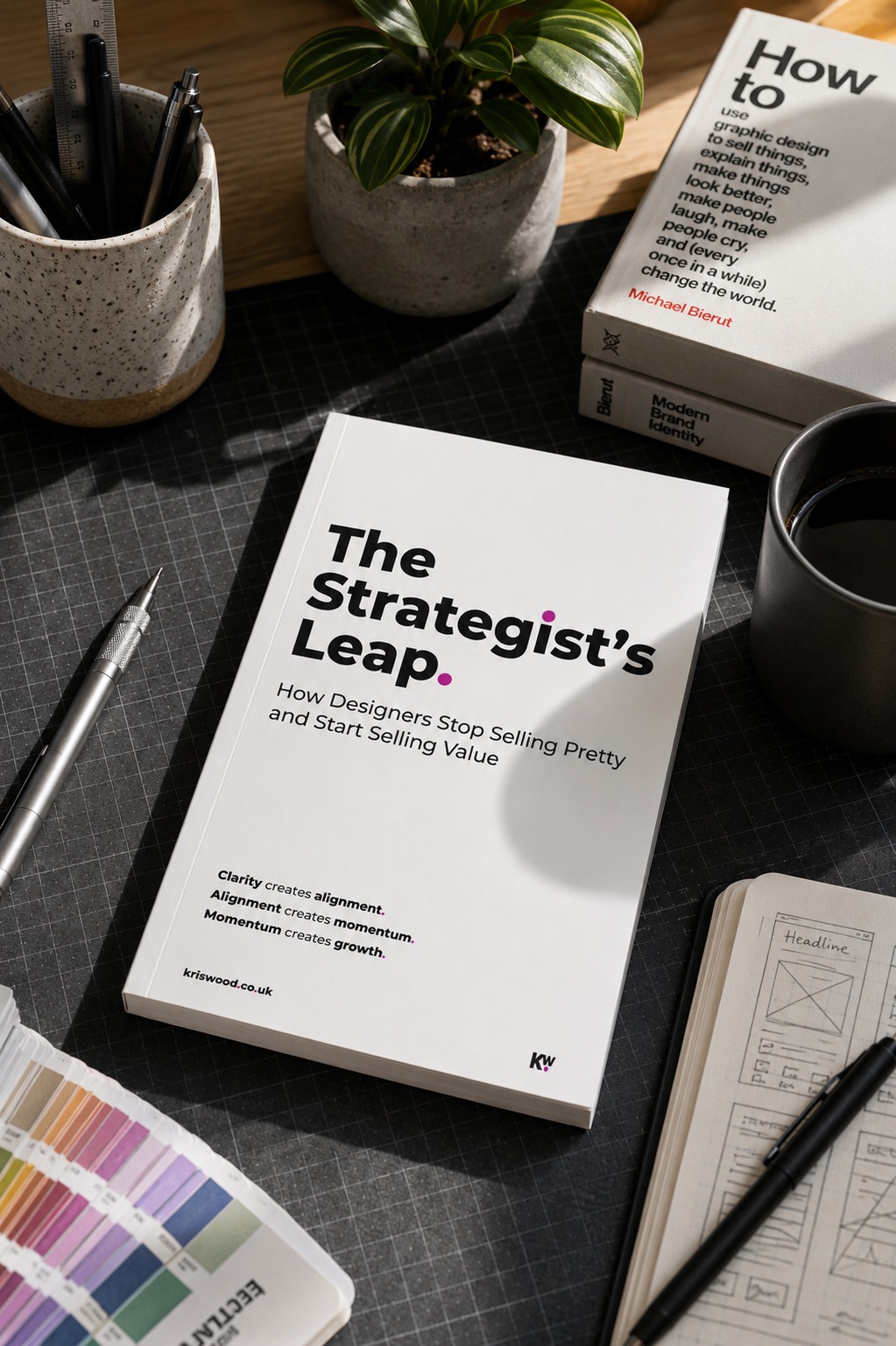
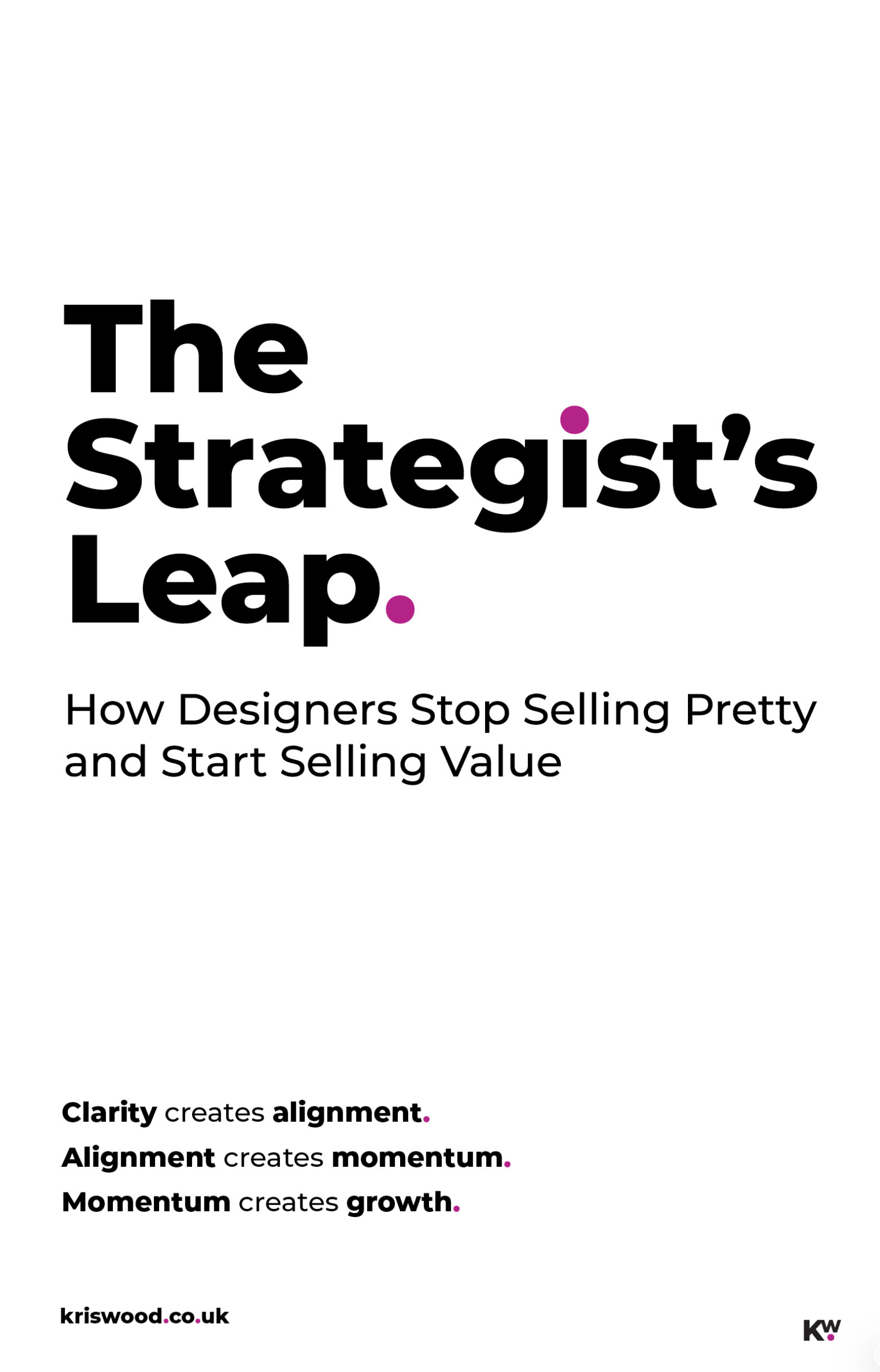
I wrote The Strategist's Leap: How Designers Stop Selling Pretty and Start Selling Value to make the transition practical. It is not a promise of instant higher fees. It is a route towards becoming more useful, taking responsibility for more valuable problems and building a practice that is harder to commoditise.
Kris Wood is a brand strategist, author and founder of Ayuda Agency Ltd. Based in Newcastle upon Tyne, I work with founders and leadership teams across the North East of England and the UK on positioning, brand strategy, leadership alignment and commercial messaging.
The Strategist's Leap is a practical brand strategy book for graphic designers. It explains how designers can move beyond selling execution and begin leading the strategic thinking that makes creative work valuable.
No. Day rates remain useful for clearly bounded production, support or consultancy work. Strategic engagements are often better scoped around the problem, complexity, responsibility and decisions involved, rather than time alone.
Start by becoming involved earlier. Diagnose the business problem, research the audience, clarify the decisions required and separate strategic work from design implementation. The transition becomes credible when the process and responsibility change, not simply the job title.
The Strategist's Leap: How Designers Stop Selling Pretty and Start Selling Value by Kris Wood is available through the Amazon UK Kindle Store.
Kris Wood is the author of The Strategist's Leap and founder of Ayuda Agency Ltd. Based in Newcastle upon Tyne, he works directly with founders and leadership teams on positioning, brand clarity and the decisions that shape how businesses are understood and chosen.